Your Hotel Website in 2026: Beyond the Brochure
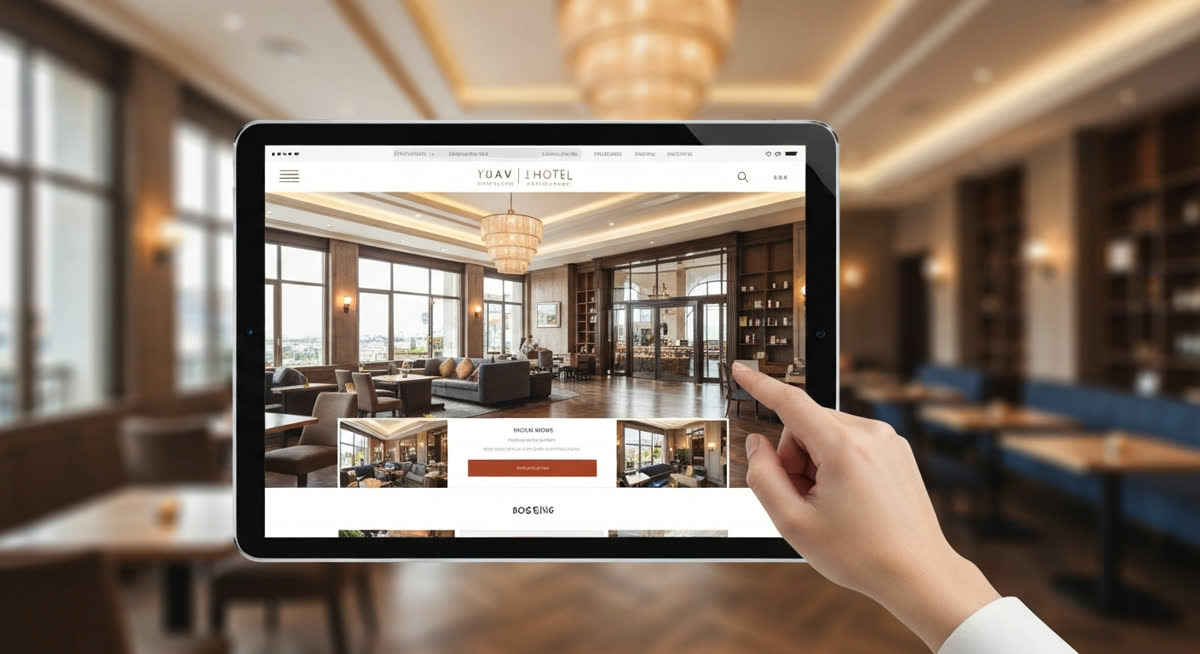
Remember the brochure website? That digital placeholder where your hotel’s glossy photos sat next to a generic "Contact Us" form? Good. Because in 2026, that era is definitively over. Your hotel website must evolve from a static digital billboard to a dynamic, revenue-generating machine. The stakes have never been higher, with travelers making decisions faster, often on mobile, and increasingly through AI-driven search experiences. For hoteliers who adapt, this shift represents a monumental opportunity to reclaim direct bookings and build lasting guest relationships.
The modern traveler's journey is a complex tapestry of searches, comparisons, and micro-moments. They're not just looking for a room; they're looking for an experience, and they expect their online interaction with you to be as seamless and personalized as their stay. This means your website isn't just a marketing tool; it's a critical sales channel, a guest relations hub, and the primary engine for your direct booking strategy. The "set it and forget it" mentality is a relic of the past, replaced by an imperative for continuous optimization across direct booking engines, local SEO, and structured data.
Why Your Hotel Website Needs a Direct Booking Engine, Not Just a "Contact Us" Form
Let's be blunt: if your hotel website isn't driving direct bookings, it's costing you money. OTAs, while valuable for discovery, typically command commission fees ranging from 15% to 30% per booking. Every booking routed through a third-party is a slice of your revenue that doesn't reach your bottom line. Direct bookings, conversely, allow hotels to retain 95.82% of guest-paid revenue compared to only 82.06% from OTA channels. The numbers speak for themselves: direct means more profit.
Beyond the immediate financial upside, direct bookings give you invaluable control. You own the guest relationship from the very first interaction, enabling personalized communication, upselling opportunities, and the collection of first-party data that fuels loyalty programs and future marketing efforts. This data is gold. It allows you to understand guest preferences, anticipate needs, and tailor offers that encourage repeat stays, which are significantly cheaper to secure than new ones.
But a direct booking engine isn't just about having a "Book Now" button. It needs to be a highly optimized, mobile-first experience. Mobile-first booking is projected to dominate with a 75% market share by 2026. An average hotel website conversion rate typically falls between 1.5% and 2.5%, but "booking intent conversion rates" (bookings divided by sessions that reach the booking engine) can run between 8-15%. This means the journey from "considering" to "booking" must be frictionless. Guests abandon booking engines when they encounter inconsistent room descriptions, unclear pricing, or outdated photos. A unified platform, like Hospitality360, ensures your direct booking engine is seamlessly integrated with your PMS, guaranteeing real-time availability, accurate pricing, and a consistent, high-converting experience across all devices. This integration eliminates the data silos that plague fragmented systems, where your booking engine might not "talk" to your inventory or guest CRM.
How Local SEO for Hotels Powers AI-Driven Discovery and Bookings
In 2026, when a traveler asks "Hey Google, find a boutique hotel near Miami Beach with a great spa," they expect an instant, relevant answer. This isn't just traditional SEO anymore; it's about being visible in AI-generated answers and local search results. And the single most powerful free marketing tool for this? Your Google Business Profile (GBP).
Your GBP is no longer just a listing; it's a dynamic data feed powering your visibility in the local map pack, Google Maps, Google Hotel Search, and increasingly, AI-generated answers. Active GBP management is crucial. This means ensuring NAP (Name, Address, Phone) consistency across all online platforms, uploading fresh, high-quality photos and videos regularly (not stock photos!), and utilizing Google Posts for special offers and updates.
Crucially, guest reviews are paramount. Review volume, recency, and response rate are all ranking factors for local SEO and powerful conversion tools. Hotels with more than 250 rooms generate five times more reviews than properties with 1-50 rooms, but all segments are growing, emphasizing the need for active solicitation and thoughtful responses. Responding to all reviews, positive or negative, builds trust with potential guests and AI algorithms alike. By operating on a unified platform, guest data captured at check-out can automatically prompt review requests, and your CRM can centralize all feedback, making management efficient and impactful.
Structured Data: The Secret Language Your Hotel Website Must Speak to AI
If you want AI to "understand" your hotel, you need to speak its language: structured data. This is machine-readable code, typically implemented as JSON-LD using the Schema.org vocabulary, embedded in your website's HTML. It explicitly tells search engines and AI exactly what your content is about – your hotel's name, location, star rating, amenities, room types, prices, and even FAQ answers.
Without structured data, search engines guess at your content; with it, you hand them a clearly labeled map. This markup enables rich results in search, like enhanced listings that can display star ratings, price ranges, and review scores, significantly improving click-through rates. It's also increasingly vital for AI-powered discovery, where structured, well-defined data is easier for AI to interpret and recommend. Key schema types for hotels include Hotel schema, RoomType schema, AggregateRating schema for reviews, and FAQPage schema for common questions. Google provides official documentation on structured data to guide proper implementation. A unified platform simplifies this technical requirement, often automating the generation and maintenance of crucial schema markup, ensuring your property is always speaking clearly to the search engines.
The End of the Brochure Site: Why Content & Experience Are King
The days of merely showcasing pretty pictures are long gone. Your hotel website in 2026 needs to be an engaging, helpful resource that anticipates and answers traveler questions. This is the true end of the brochure site – a shift from static, one-way communication to dynamic, interactive experiences. Content needs to be "AI-readable," meaning it's structured, natural-language, and intent-focused.
Think beyond room descriptions. Create localized content about nearby landmarks, events, and attractions, positioning your hotel as a local expert. Leverage FAQs to provide clear, direct answers to common guest queries, which are invaluable for AI Overviews and voice search. A mobile-first design and fast load times are non-negotiable; sites with mobile page loads under 2.5 seconds convert twice as high as those over 4 seconds. Your website should load fast and be easy to navigate on any screen size.
This focus on user experience extends to transparency and accuracy. Travelers compare your website against OTA listings; inconsistencies in descriptions or pricing will send them back to platforms they trust. A unified platform ensures all your guest-facing content, from room details to restaurant menus and spa services, is centrally managed and consistently updated across your website, booking engine, and even your Google Business Profile. This holistic approach builds trust and keeps guests on your site.
The Unified Advantage: Why Disconnected Vendors Are a 2025 Problem
The biggest impediment to achieving the direct booking, local SEO, and structured data mastery described above? Fragmented technology stacks. Hotels often grapple with a patchwork of six or more disconnected vendors: a website provider, a booking engine, a PMS, a CRM, a POS for F&B, and separate accounting software. Each operates in its own silo, leading to:
- Data inconsistencies: Guest preferences, booking history, and spend data are scattered, preventing a unified guest profile.
- Operational inefficiencies: Staff spend valuable time reconciling data or manually transferring information between systems.
- Missed revenue opportunities: Without a holistic view, personalization is limited, and upselling/cross-selling opportunities are lost.
- Slow innovation: Integrating new features or adapting to market changes becomes a costly, complex endeavor.
This is where a truly unified platform like Hospitality360 shines. By integrating POS, reservations, guest CRM, hotel websites with direct booking, accounting ERP, and AI into a single, cohesive ecosystem, you eliminate data silos and streamline operations. Guest data flows seamlessly from their first website visit to their check-out, empowering personalized experiences, targeted marketing, and accurate reporting. Staff productivity improves, innovation accelerates, and you gain a clearer, data-driven view of your entire guest journey. As industry reports highlight, connected data ecosystems are replacing fragmented channels, and first-party data is becoming your hotel's revenue infrastructure.
In 2026, your hotel website is more than just an online presence; it's the digital heart of your operation, directly impacting profitability and guest loyalty. Embracing direct booking, optimizing for local SEO, leveraging structured data, and moving beyond the brochure site are not optional extras – they are fundamental to success. The smart hotelier understands that the future is integrated, efficient, and relentlessly guest-centric.
One-sentence takeaway: To thrive in 2026, your hotel website must be a unified, intelligent platform driving direct bookings and delivering a seamless guest experience.
Google Search Central: Introduction to Structured Data SiteMinder: Latest Trends in the Hotel Industry for 2026 Hotel Tech Report: 7 Digital Marketing Trends Every Hotel Should Watch in 2026See how Hospitality360 replaces Toast, OpenTable, SevenRooms and M3 with a single source of truth.
Explore the Platform