The Unified Guest Graph: Luxury's Next Frontier
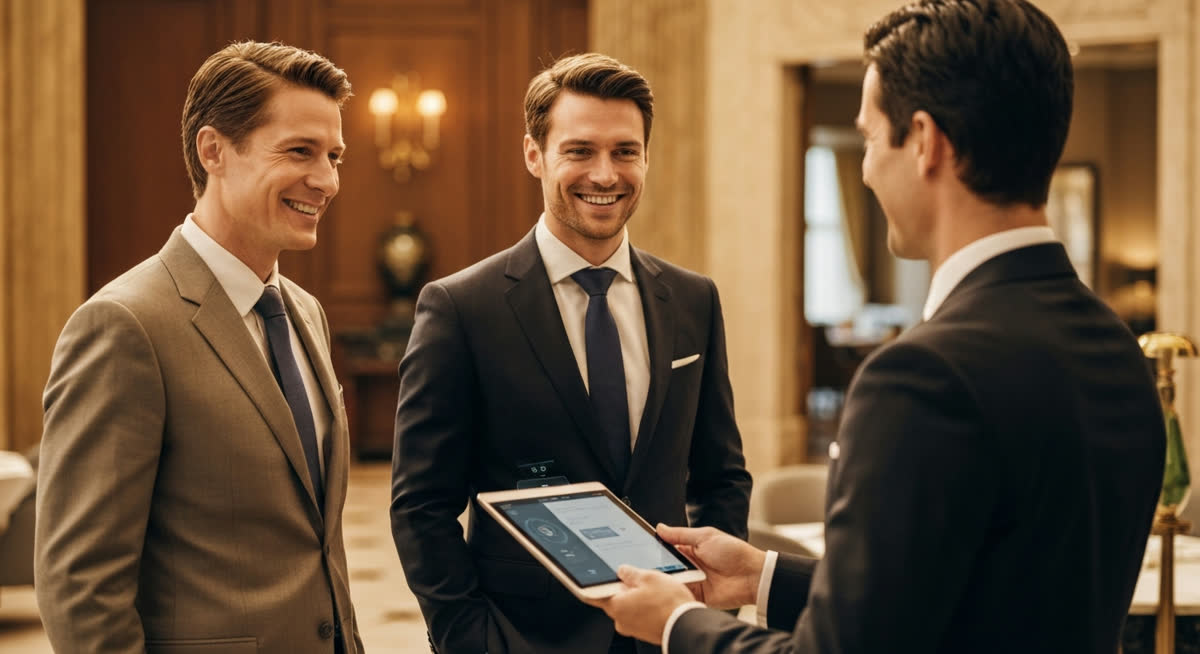
In the rarefied air of luxury hospitality, service isn't just a transaction; it's an art form. It's the anticipation of needs, the whisper of a preferred vintage appearing unbidden, the seamless transition from a spa treatment to a reserved table. For too long, this artistry has relied on individual brilliance and fragmented data. But the game is changing. The unified guest graph is no longer a futuristic pipe dream; it's the next frontier of luxury service, offering a singular, comprehensive view of every guest across every touchpoint – from hotel stays and restaurant reservations to spa treatments and private club visits.
For decades, our industry has been hobbled by the tyranny of silos. The hotel PMS knew one thing, the restaurant POS another, the spa software a third. Each system held a piece of the guest puzzle, but none presented the whole picture. The result? Missed opportunities, redundant questions, and an experience that, while perhaps excellent in parts, lacked true, holistic personalization. This fragmentation, frankly, is no longer acceptable in an era where guests expect hyper-relevance and seamless interactions.
What is a unified guest graph and why does it matter?
Imagine a digital tapestry woven from every interaction a guest has with your property. That’s the essence of the unified guest graph. It’s a dynamic, centralized profile that consolidates data from every operational system – PMS, POS, CRM, spa booking, golf pro shop, event management, and even website browsing history. This isn’t just a bigger database; it’s an intelligent network of interconnected data points, allowing you to understand preferences, past behaviors, and potential needs with unprecedented clarity.
Why does it matter so profoundly for luxury? Because luxury is defined by personalization, discretion, and the feeling of being truly seen and understood. A guest who stayed in Room 402 last year, prefers specific pillows, and dines regularly at your Michelin-starred restaurant should not be asked for their dietary restrictions anew at every turn. Their history with your property is a goldmine of insights, and the unified guest graph finally makes that gold accessible and actionable.
How do disconnected systems hurt luxury hospitality?
The pain points of siloed data are familiar to anyone who's operated a multi-faceted luxury property. Without a unified guest graph, the guest experience suffers in myriad ways:
- Inconsistent Personalization: A guest's preference for sparkling water noted at the restaurant might not carry over to their in-room mini-bar, leading to a disconnect in service. Or worse, a guest celebrating an anniversary in your restaurant might not receive a celebratory amenity in their hotel room.
- Redundant Data Entry: Staff repeatedly asking for the same information – allergies, special occasions, preferred room type – frustrates guests and wastes valuable staff time that could be spent on genuine service.
- Missed Revenue Opportunities: Without a holistic view, properties struggle to cross-sell and upsell effectively. A guest who regularly books spa treatments might never be offered a package deal with their hotel stay, for example.
- Inefficient Operations: Marketing efforts become scattershot without precise segmentation. Guest service recovery is slower when staff lack immediate access to a guest's complete history.
- Erosion of Trust: When a luxury guest feels like a stranger at different parts of the same property, it erodes the perception of exclusive, attentive service.
A recent study by McKinsey highlighted that personalization can drive 5-15% revenue growth for companies that excel at it, and a 10-30% increase in marketing spend efficiency. In luxury hospitality, where every percentage point counts, ignoring this potential is simply leaving money on the table.
What are the real benefits of a 360-degree guest view?
Adopting a unified guest graph transforms luxury service from reactive to proactive, leading to tangible benefits:
Unparalleled Personalization and Anticipatory Service
This is where the magic happens. Imagine a guest checking into your hotel. Before they even reach the front desk, their profile flags their preference for a high-floor room with a city view, their favorite newspaper, and that they recently celebrated a birthday at your sister property's restaurant last month. The front desk agent greets them by name, mentions a special amenity curated for their return, and confirms their preferred room. This level of anticipatory service, driven by integrated data, creates unforgettable moments.
Beyond the stay, the graph can inform targeted communications. A guest who frequently books golf tee times might receive an exclusive offer for a new golf course package, rather than a generic spa promotion. This precise targeting enhances engagement and reduces marketing fatigue. According to Accenture, 91% of consumers are more likely to shop with brands that provide offers and recommendations that are relevant to them.
Optimized Operations and Streamlined Workflows
When all systems speak the same language, operational efficiency soars. Housekeeping knows pillow preferences before arrival, the kitchen is aware of dietary restrictions across all dining outlets, and the concierge can instantly book a preferred table, knowing the guest's past dining habits. This reduces errors, speeds up service, and frees staff to focus on genuine guest interaction rather than administrative tasks. For example, the Ritz-Carlton, renowned for its service, leverages extensive guest preferences to deliver highly personalized experiences, a practice made significantly easier with integrated data.
Enhanced Revenue Generation and Loyalty
A unified view allows for intelligent upselling and cross-selling. If a guest frequently dines at your restaurant and stays at your hotel, a system can automatically suggest a curated "Dine & Stay" package. Private club members who regularly use fitness facilities could be targeted with new wellness program promotions. This strategic approach to offers, based on a deep understanding of each guest’s preferences and spend, drives incremental revenue. Moreover, delighted guests become loyal advocates, leading to higher lifetime value and powerful word-of-mouth marketing.
How is AI transforming guest personalization?
The unified guest graph isn't just a static collection of data; it's the fuel for intelligent systems. Artificial Intelligence (AI) takes this rich data and transforms it into predictive insights and automated personalization. AI can analyze vast amounts of guest data to identify patterns, predict future behavior, and recommend tailored experiences or offers in real-time. From dynamic pricing based on individual booking history to AI-powered chatbots that resolve queries with full context of the guest's relationship with your property, AI leverages the unified graph to elevate every interaction. It enables proactive service recovery, identifies potential churn risks, and even helps curate bespoke itineraries before a guest even expresses a need.
Choosing the right platform for a unified guest experience
The vision of a unified guest graph is compelling, but its realization hinges on the right technology. Attempting to stitch together disparate systems from different vendors with custom integrations is a costly, complex, and often ultimately unsustainable endeavor. Each point solution has its own data model, its own update schedule, and its own limitations, creating a digital Frankenstein that struggles to deliver true unity.
This is precisely why a vertically-integrated platform like Hospitality360 (the solution built by The Compendium Company) is not just an advantage, but a necessity for the future of luxury hospitality. By running your entire operation – POS, reservations, guest CRM, hotel websites with direct booking, accounting ERP, and AI – on one unified platform, you inherently create that single, powerful guest graph. Data flows seamlessly, insights are immediate, and personalization becomes intrinsic to every facet of your service. This eliminates data silos by design, ensuring that every interaction, every preference, and every spend contributes to a single, actionable profile.
The era of fragmented guest data is over. The unified guest graph is not merely a technological upgrade; it's a paradigm shift in how luxury properties understand and serve their most discerning guests. Embrace it, and redefine what truly exceptional hospitality means.
See how Hospitality360 replaces Toast, OpenTable, SevenRooms and M3 with a single source of truth.
Explore the Platform