
What Is Dynamic Pricing in Hotel Revenue Management?
If you're asking what is dynamic pricing in hotel revenue management, the answer is straightforward: it's the practice of adjusting your room rates in real time based on fluctuating market demand, current occupancy, and competitor data to maximize revenue. Instead of relying on static, seasonal rate sheets, dynamic pricing uses data to find the exact right price for every room, every night.
For owners and general managers of boutique hotels, resorts, and inns, dynamic pricing isn't just a corporate buzzword. It's the engine that drives profitability. In late 2026, U.S. hotel demand hit an all-time record, building on strong metrics from earlier in the year, such as the record-breaking August U.S. hotel performance. According to data from STR and CoStar, 2026 revenue per available room (RevPAR) growth projections were revised upward to 5.9%, with average daily rate (ADR) expected to rise 3.8%. In a market moving this fast, a flat rate leaves money on the table during demand spikes and leaves rooms empty during lulls.
The End of Static Pricing
Historically, hoteliers set prices based on a simple calendar: high season, low season, and shoulder season. A Tuesday in October cost the same as a Wednesday in October, regardless of whether a massive conference was in town or a sudden storm caused mass cancellations.
Static pricing fails because it ignores the reality of consumer behavior and market elasticity. If a local festival drives a sudden surge in flight bookings and hotel searches, your static rate will sell out your property months in advance at a fraction of what guests were actually willing to pay. Conversely, if demand drops, your static rate acts as a barrier, sending potential guests to the property down the street.
Dynamic pricing replaces this rigidity with agility. By analyzing booking pace (how quickly rooms are filling up for a future date) and market signals, automated revenue management systems can adjust your rates multiple times a day. This ensures you're capturing the highest possible ADR when demand is strong and maintaining baseline occupancy when demand is soft.
The Shift to AI-Powered Hyper-Dynamic Pricing
As we move through 2026, the industry is transitioning from traditional dynamic pricing to what many call hyper-dynamic pricing. Older rule-based systems relied heavily on "if-then" logic. For example, if occupancy hits 70%, then raise rates by 10%. While effective, these rigid rules often failed to account for complex, overlapping variables.
Today, AI-driven revenue management systems use predictive modeling and machine learning. They don't just react to what happened yesterday; they forecast what will happen tomorrow. By analyzing vast datasets, these AI models can predict demand surges weeks before they materialize in your booking engine. Properties adopting these advanced, future-built AI pricing models are seeing revenue increases that significantly outpace those relying on manual spreadsheet adjustments.
The Three Pillars of a Dynamic Pricing Strategy
To execute dynamic pricing effectively, operators rely on three core data pillars. You don't need a degree in data science to understand them, but you do need to know how they interact.
1. Internal Data and Demand Forecasting
Your own property’s data is your most valuable asset. A robust dynamic pricing strategy starts by analyzing your historical booking curves and current internal metrics. The system looks at your Property Management System (PMS) to evaluate:
- Current Occupancy: How many rooms are booked for a specific future date?
- Booking Pace: Are rooms booking faster or slower than they did for the same date last year?
- Cancellations: Is there a sudden spike in cancellations that requires a rate adjustment to refill the rooms?
For example, if you manage a 40-room luxury inn and notice that your suites for a weekend six months out are already 60% booked, your booking pace is exceptionally high. A dynamic pricing engine will immediately increase the rates for the remaining suites to capitalize on this early demand.
2. External Data and Market-Based Pricing
You don't operate in a vacuum. Dynamic pricing also ingests external data to understand the broader market context. This includes monitoring local events, weather patterns, airline capacity, and competitor pricing.
However, a word of caution on competitor pricing: matching your competitors should never be your primary strategy. Studies from the Cornell Center for Hospitality Research have consistently shown that hotels shifting to a lower pricing bracket to match competitors experience a greater loss in RevPAR. Professor Cathy Enz and her colleagues analyzed thousands of hotel pricing data points, proving that maintaining a stable or slightly upward pricing strategy yields far better long-term profitability than racing to the bottom. Slashing your rates not only hurts your RevPAR, but it also damages your brand equity and attracts a guest demographic that may not align with your luxury amenities.
3. Price Elasticity and Rule-Based Optimization
Elasticity measures how sensitive your guests are to price changes. During peak demand, demand is inelastic—guests will pay a premium because supply is scarce. During a rainy midweek in November, demand is highly elastic—a small drop in price might be necessary to secure a booking.
Operators set "floors" (the absolute lowest rate they'll accept) and "ceilings" (the highest rate). The dynamic pricing algorithm operates within these bounds, optimizing for the highest possible total revenue.
Essential KPIs for Your Pricing Strategy
You can't manage what you don't measure. When implementing dynamic pricing, hotel operators track specific Key Performance Indicators (KPIs) to ensure the algorithm is actually driving profitability, not just occupancy.
| KPI | What It Measures | Why It Matters for Dynamic Pricing |
|---|---|---|
| RevPAR | Revenue Per Available Room | The ultimate metric of success. It balances occupancy and ADR. A successful dynamic pricing strategy will always increase RevPAR. |
| ADR | Average Daily Rate | Shows the average price paid for occupied rooms. Dynamic pricing should push this higher during high-demand periods. |
| CPOR | Cost Per Occupied Room | The hard costs of turning over a room. Your dynamic pricing "floor" must always sit comfortably above your CPOR to ensure profitability. |
| Occupancy Rate | Percentage of available rooms sold | While not the end goal, maintaining baseline occupancy during off-peak times helps cover fixed overhead costs. |
Understanding the relationship between your pricing and your operational costs is critical. A deep dive into USALI hotel accounting will help you pinpoint your exact CPOR, ensuring your dynamic pricing floors never result in a net loss on a sold room.
Beyond the Room Rate: Length of Stay Restrictions
Dynamic pricing isn't just about changing the dollar amount; it's also about controlling inventory availability. A sophisticated revenue manager uses dynamic pricing in tandem with length-of-stay restrictions.
Consider a scenario where a popular music festival runs from Friday to Sunday. If you only raise rates, you might get a guest who books a single night on Saturday. That leaves you with "orphan nights" on Friday and Sunday that are incredibly difficult to sell. By implementing a Minimum Length of Stay (MLOS) restriction of three nights alongside your dynamic rate, you protect your inventory and maximize the total revenue yield for the weekend.
For operators looking to deepen their expertise in these specific tactics, programs like eCornell's Advanced Hospitality Revenue Management offer excellent frameworks for balancing pricing and inventory controls.
Tying It All Together with Your Tech Stack
The biggest hurdle boutique operators face when adopting dynamic pricing isn't the math; it's the technology. If your systems are siloed, dynamic pricing becomes a manual nightmare. You can't afford to have a revenue manager calculating rates in a spreadsheet and then manually typing them into an Extranet.
To succeed, your Property Management System, Revenue Management System, and direct booking engine must communicate in real time. When the algorithm detects a surge in demand and raises the rate by $45, that new price must instantly reflect on your website and across all distribution channels.
This is where a unified platform changes the game. At Hospitality360, our platform seamlessly connects your POS, reservations, guest intelligence, and hotel websites with direct booking. By unifying these core functions alongside your accounting, you ensure that your dynamic rates push instantly to your direct channels, allowing you to capture peak demand without paying exorbitant OTA commissions. (For more on winning the distribution battle, read our guide on why direct booking beats OTAs).
Furthermore, because our platform integrates guest intelligence, your pricing strategies can become even more refined. You can offer dynamically priced upsells—like a guaranteed late checkout or a premium dining reservation—based on the specific profile of the guest booking the room.
Best of all, Hospitality360 is currently in founding-member early access. This means the platform is free during the early access period, with your founding pricing locked in permanently. It's an unparalleled opportunity to modernize your tech stack and implement true, automated dynamic pricing without the friction of pieced-together legacy software.
The Bottom Line for Operators
In the hyper-competitive landscape of 2026, relying on static pricing is a fast track to margin erosion. As operational costs rise and traveler demand fluctuates with increasing speed, operators must adapt. Dynamic pricing allows you to capture the full value of your luxury asset during peak times, while remaining competitive and visible when demand softens.
By leveraging internal data, monitoring market signals, and utilizing automated AI technology to push rates in real time, you transform your pricing strategy from a static calendar into a dynamic profit engine. Start by calculating your true CPOR, establish your pricing floors and ceilings, and let the data guide your daily rates. The revenue is out there—you just need the right strategy to capture it.
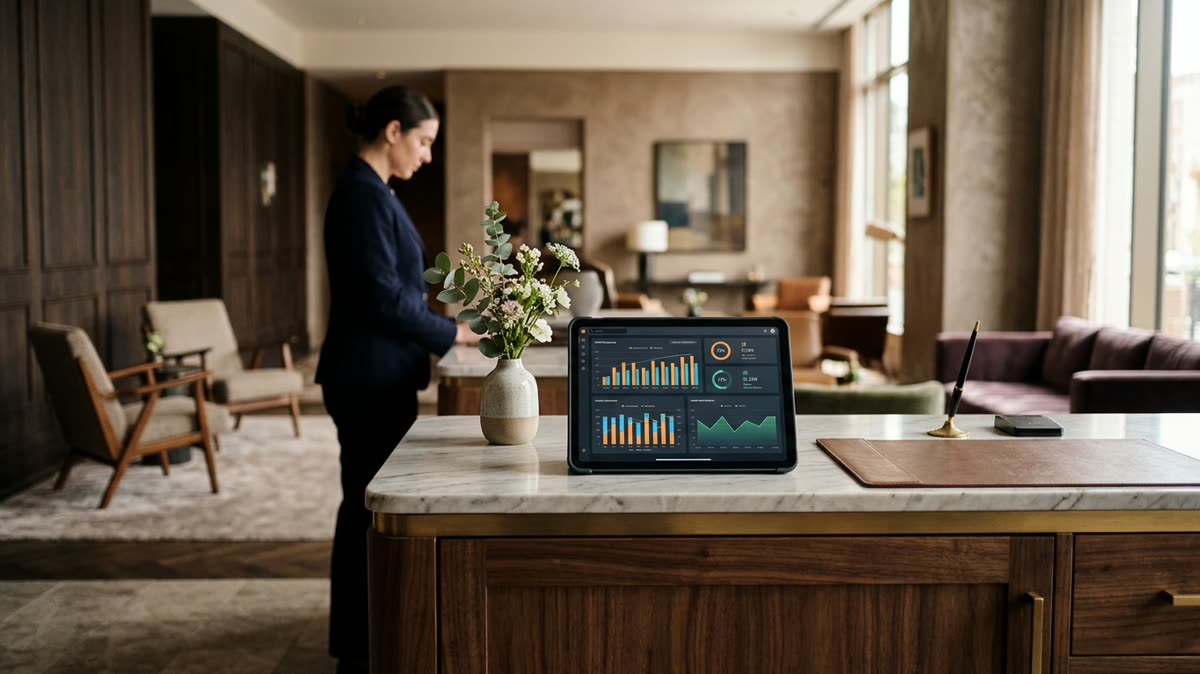
Header image: AI-generated illustration.
See how Hospitality360 replaces Toast, OpenTable, SevenRooms and M3 with a single source of truth.
Explore the Platform