
How Much Does a Restaurant POS System Cost in 2026?
If you're asking how much does a restaurant pos system cost, the short answer for 2026 is that you'll pay anywhere from $0 to $1,500 upfront per terminal for hardware, $0 to $399 per month for the software subscription, and roughly 2.49% to 3.09% of every card transaction in payment processing fees.
For independent hotel operators and general managers running boutique properties, the food and beverage (F&B) department is a critical profit center. But upgrading a fine-dining room, a lobby cafe, or a resort bar means navigating a minefield of vendor pricing. The sticker price on a vendor's website is rarely the final number you pay. Once you add kitchen display systems, handheld order pads, and payment processing markups, a "cheap" system can quietly drain thousands of dollars from your bottom line.
Here is a direct, evidence-led breakdown of what a restaurant point-of-sale (POS) system actually costs this year, and how to avoid the hidden fees that trap so many hospitality operators.
The Four Layers of POS Pricing
Every restaurant POS system stacks four separate costs. Some vendors roll them together into a single monthly payment, while others break them apart line by line. You're always paying for all four, whether you see them clearly on the invoice or not.
1. Software Subscriptions (The SaaS Fee)
The software fee is the number every vendor leads with in their marketing because it looks affordable in isolation. In 2026, monthly software subscriptions generally fall into three tiers:
| POS Provider | Base Software (Monthly) | Target Audience |
|---|---|---|
| Toast | $0 (Starter) to $69 (Standard) | High-volume restaurants and bars |
| Square for Restaurants | $0 (Free) to $49 (Plus) | Cafes, quick-service, and pop-ups |
| Lightspeed | $69 (Starter) to $399 (Pro) | Fine dining and complex inventory |
The Operator's Rule: Never buy software based solely on the monthly fee. A system that costs $0 a month but charges a premium on payment processing will cost a high-volume restaurant far more by the end of the year.
2. Hardware Costs (Terminals, Handhelds, and KDS)
Hardware is usually your largest upfront cash expense. A modern F&B setup requires much more than just a cash register. You need touchscreen terminals, receipt printers, cash drawers, and reliable networking gear.
If you choose a system like Square, you can often use iPads you already own, which drastically reduces your initial cash outlay. However, consumer-grade tablets aren't always built to withstand the heat, grease, and spills of a commercial kitchen. If you go with proprietary, restaurant-grade hardware, expect to pay between $500 and $1,500 per primary terminal.
For full-service dining, handheld ordering devices are no longer a luxury; they're a necessity for turning tables faster. Equipping your serving staff with handhelds allows them to take orders and process payments directly at the table, reducing errors and saving countless steps to and from the POS station. Similarly, Kitchen Display Systems (KDS) have largely replaced paper ticket printers, improving ticket accuracy and kitchen throughput. Budget an additional few hundred dollars for every KDS screen or handheld device you deploy.
3. Payment Processing (The Hidden Anchor)
Payment processing is the iceberg that sinks F&B margins. While the software fee is fixed, processing fees take a bite out of every single guest check.
Most major POS providers now act as their own payment processors, locking you into their rates as a condition of using their software. A standard flat rate in 2026 hovers around 2.49% to 3.09% plus 15 cents per transaction. For example, Toast's Pay-as-You-Go plan charges a 3.09% processing fee to cover the cost of the "free" hardware and software, while their traditional paid plan lowers that rate to 2.49%.
Consider a boutique hotel restaurant doing $2 million a year in card sales. A processing rate of 3.09% costs the business $61,800 annually. A rate of 2.49% costs $49,800. That difference is $12,000 straight to your bottom line. Always negotiate your processing rates if your transaction volume supports it, and read the fine print to ensure your rates are locked in and not subject to arbitrary mid-contract hikes.
4. Implementation and Add-Ons
The final layer includes the one-time installation fees and recurring software add-ons. If you need a certified technician to run ethernet cables, configure your local network, and mount KDS screens, expect to pay an implementation fee ranging from a few hundred to over a thousand dollars.
Furthermore, modules for online ordering, loyalty programs, advanced inventory management, and marketing are often billed as separate monthly add-ons. These "optional" features are usually essential for running a modern restaurant, and they can easily double or triple your base software subscription cost.
The Hotel Operator's Dilemma: The Patchwork Tech Stack
For hotel owners and general managers, calculating POS costs comes with an extra layer of operational complexity: integration. A restaurant POS system that works perfectly for a standalone diner can be a nightmare inside a boutique hotel if it doesn't communicate natively with the Property Management System (PMS).
Imagine a guest at your boutique resort orders a $150 bottle of wine at the pool and wants to charge it to their room. The server needs to instantly verify the room number and guest name. Without a tightly integrated POS and PMS, this requires a phone call to the front desk or a manual paper slip. This friction leads to lost revenue, unverified charges, and frustrating guest experiences at checkout.
When your F&B POS and your PMS are disconnected, you suffer from reporting lag, duplicated labor, and fulfillment errors. Your accounting team spends hours every morning manually reconciling F&B revenue against room revenue. This is exactly the true cost of your patchwork hotel tech stack.
Integrated systems allow operators to connect F&B sales, labor, and guest behavior in a usable way. A unified approach eliminates the need for expensive third-party integration software and reduces the daily accounting headaches. For GMs who rely on accurate USALI hotel accounting to track departmental profitability, having F&B data flow seamlessly into the general ledger is non-negotiable.
This is why we built Hospitality360 as a single, unified platform for luxury hospitality. By combining your POS, reservations, guest intelligence, direct-booking websites, and accounting into one system, you eliminate the integration fees and data silos that plague legacy setups. We're currently in founding-member early access, which means the platform is free during early access with your founding pricing locked for the future.
How to Budget for Your Next POS in 2026
When evaluating how much a restaurant POS system costs, you must look at the Total Cost of Ownership (TCO) over a three-year period. Don't just compare month-one costs and assume the cheapest software subscription is the best deal.
Run the math on your own P&L before you sign a multi-year contract:
- Calculate Year-One Cash Outlay: Add up all hardware, shipping, taxes, and implementation fees. If you're financing the hardware, calculate the total interest paid over the term.
- Project Your Annual SaaS Fees: Multiply the monthly software base rate, plus all required add-ons (like online ordering or KDS software), by 12.
- Forecast Processing Fees: Take your projected annual credit card revenue and multiply it by the vendor's quoted processing rate. Don't forget to factor in the per-transaction flat fee (usually 10 to 15 cents), which severely impacts cafes and bars with low average check sizes.
Add those three numbers together. That is your true year-one cost. Compare that figure across three different vendors before making your final decision.
Final Thoughts
The hospitality industry is shifting rapidly. Guests expect seamless tableside payments, digital receipts, and flawless room charges. At the same time, operators need real-time data to protect their margins against rising food costs and labor challenges.
Whether you choose a lightweight tablet setup for a small lobby cafe or a fully unified hospitality platform for a luxury resort, the goal remains the same: your technology should speed up your staff, delight your guests, and protect your profits. Know your numbers, demand transparent pricing, and never let a hidden processing fee eat your hard-earned F&B margin.
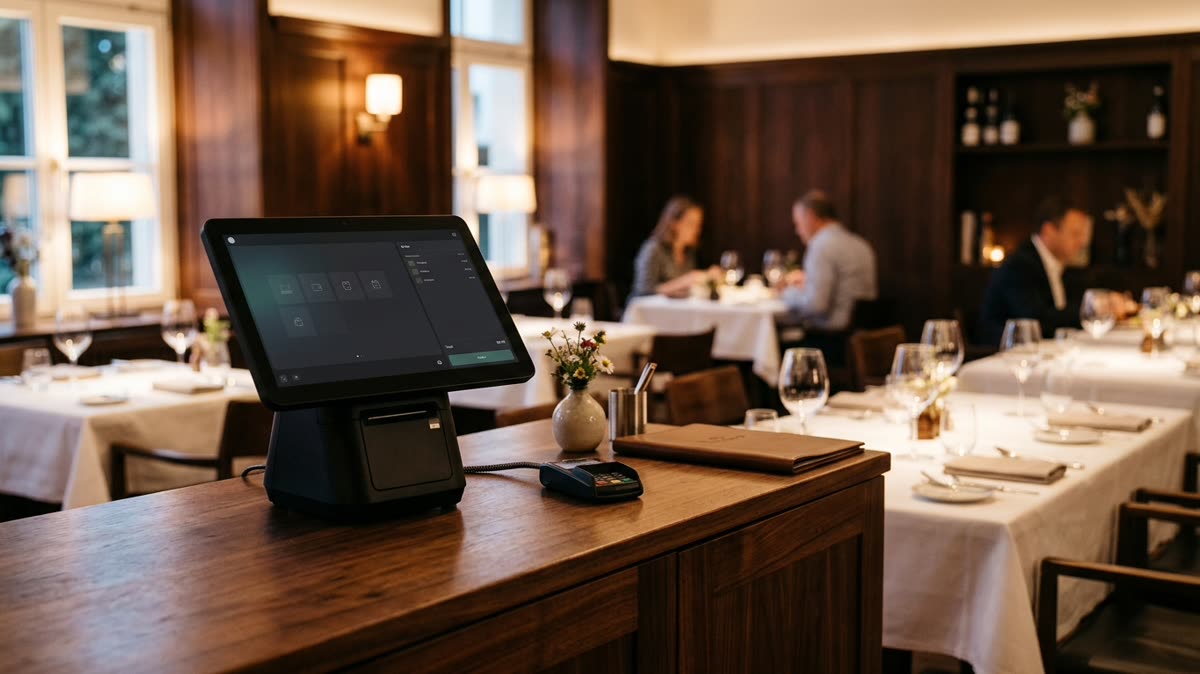
Header image: AI-generated illustration.
See how Hospitality360 replaces Toast, OpenTable, SevenRooms and M3 with a single source of truth.
Explore the Platform